The 2008 financial crisis stands as a watershed moment in the history of global finance, revealing fundamental weaknesses in the regulatory frameworks that governed banks. The collapse of major institutions not only precipitated a worldwide economic downturn but also led to a reevaluation of the rules that shape capital requirements. Since then, the regulatory landscape has undergone significant transformation, particularly in the United States, where large banks are now subject to stringent capital base requirements that starkly contrast with the pre-crisis environment.
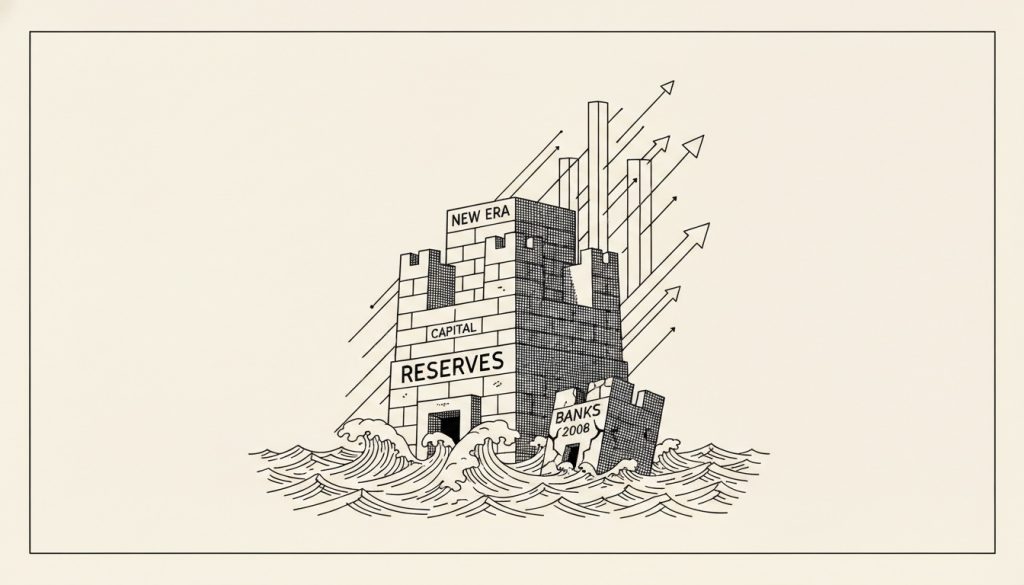
Before the financial meltdown, banks were primarily governed by a set of regulations established by the Basel II framework, which emphasized risk-weighted capital ratios. Under this framework, capital requirements were calculated based on the perceived risk of assets held on a bank’s balance sheet, allowing institutions some degree of flexibility. However, this approach proved to be critically flawed. Many banks engaged in excessive risk-taking, driven by the allure of higher returns on complex financial products like mortgage-backed securities. The deficiencies in the risk-weighted system led to a situation where banks appeared adequately capitalized on paper while remaining fundamentally vulnerable in practice.
The extensive reliance on models and assumptions during this period allowed banks to underreport their risks, resulting in an environment where real capital was often inadequate to absorb actual losses. As the crisis unfolded, the consequences were dire: financial institutions crumbled, liquidity evaporated, and taxpayer-funded bailouts became a necessity. The fallout necessitated a radical rethinking of capital requirements and risk management, setting the stage for the reforms that followed.
In the wake of the crisis, the Basel III framework was introduced, establishing more rigorous standards for bank capital. These regulations aimed to rectify the deficiencies of their predecessors by mandating higher levels of capital that were less reliant on risk weightings. For instance, the introduction of the Common Equity Tier 1 (CET1) capital requirement — set at a minimum of 4.5% — served to ensure that banks maintained a substantive buffer capable of withstanding unexpected losses. Additionally, the introduction of the Stress Capital Buffer (SCB), which varies depending on the results of annual stress tests, has equipped regulators with better tools to gauge an institution’s resilience in economic downturns.
A further evolution in the regulatory framework has occurred with the designation of Global Systemically Important Banks (G-SIBs). These institutions, deemed too-big-to-fail, face additional capital surcharges that reflect their systemic importance. While the G-SIB capital requirements range from 1% to 3.5%, depending on a bank’s size and interconnectedness, they represent a pivot toward a more precautionary approach, ensuring that the largest entities carry a heavier capital burden to mitigate risks.
Despite these improvements, the debate over the efficacy of contemporary regulations continues. Some argue that while capital requirements have become more stringent, the underlying structure of the financial system remains susceptible to shocks. Critics assert that the spirit of risk-taking persists, as banks adapt to new regulations with creative financial engineering that can circumvent stringent capital buffers. Moreover, concerns arise over the implications of these heightened requirements on banks’ ability to lend, potentially stifling economic growth.
Nevertheless, the restoration of confidence among regulators, markets, and the public is palpable. The specter of the 2008 crisis serves as a stark reminder of the consequences of lax oversight, driving regulatory bodies to create an environment that prioritizes stability over short-term gains. The current landscape, marked by a commitment to higher capital standards and enhanced regulatory oversight, represents a significant departure from the reckless practices that characterized the pre-crisis era.
In conclusion, the transformation of bank capital requirements following the 2008 financial crisis underscores the critical lessons learned upon reflection. The evolution from Basel II to Basel III, with a keen focus on higher capital buffers and systemic risk mitigation, signifies a profound shift in the regulatory mindset. While challenges remain, the changes enacted are emblematic of a financial system striving to balance resilience with the dynamism necessary for growth — a testimony to the enduring legacies of the crisis and the ongoing quest for robust financial stability.
For more context read the 2025 List of Global Systemically Important Banks (G-SIBs).
To get the full picture, read Basel III: A global regulatory framework for more resilient banks and banking systems.